
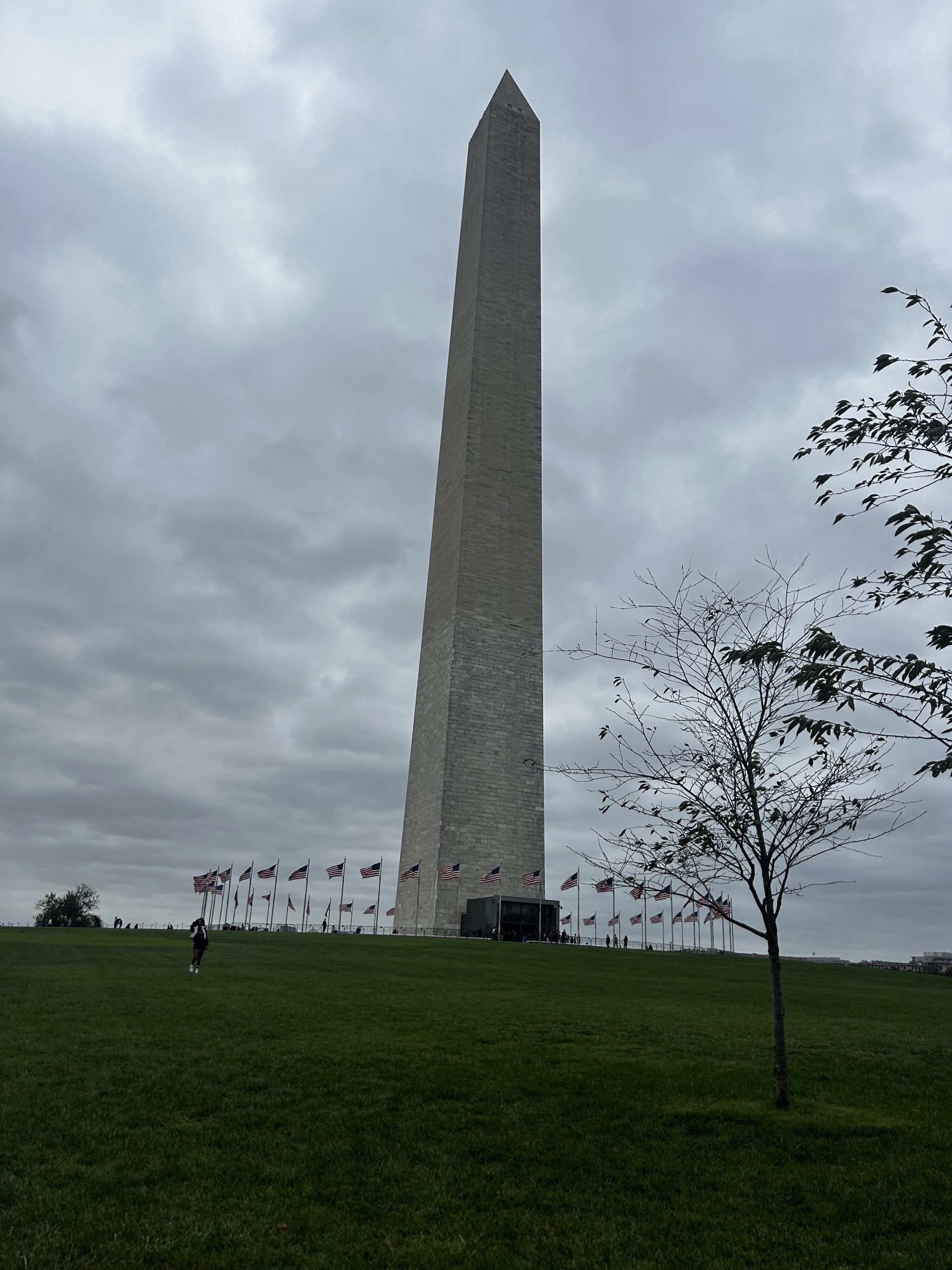
While on a historical sightseeing trip to Washington D.C. – the nation’s capital in the heart of America – I wondered about the little-known facts D.C. holds regarding its landmarks.
My aim was to learn more about this historically-heavy city, but regardless of why someone visits it, this city is worth visiting at least once in your lifetime.
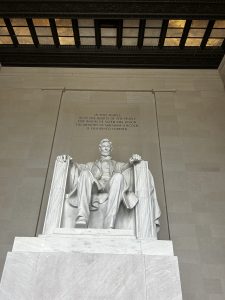
LINCOLN MEMORIAL
One of the first stops we took on this trip was to the Lincoln Memorial. Constructed in 1916, the larger-than-life statue is dedicated to Abraham Lincoln and the work that he accomplished. Although there were proposals to create some sort of memorial to the assassinated president, there was limited success for quite some time following his untimely death.
As early as 1867, the U.S. Congress passed the first of many bills containing a commission to remember the fallen leader. Eventually, a sculptor known as Clark Mills agreed to take up the project. His proposed design was grandiose-a 70 feet tall structure, surrounded on all sides by other large statues. Those who knew Lincoln were aware of his humility, and thus, did not feel as though it suited him.
Over the years, many other suggestions were made regarding the matter of exactly what kind of memorial to construct. Most did not pass a planning stage, and thus, the dilemma remained unresolved until the 1916 construction of the presently-used memorial.
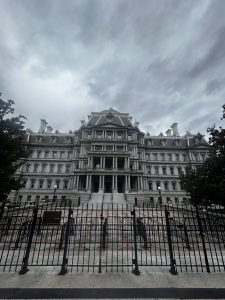
EISENHOWER EXECUTIVE BUILDING
Following our visit to the Lincoln Memorial and the reflection pool, we decided to attempt to make our way to the White House. On the way there, we eventually saw what is now known as the Eisenhower Executive Office Building. Relatively unknown by many nowadays, it is now part of the White House’s compound within D.C.
Previously, this building was known as the “State, War, and Navy Building,” often called the “SWAN” building for short. As one may be able to guess, this was once home of the State, Defense (Then called the War Department), and the Navy (Once a separate executive department in its own right) departments. It was opened in 1888, and in 1999 was renamed in memory of former president Dwight D. Eisenhower.
When opened, the building was despised by the public. Interestingly enough, famous author Mark Twain would go on to call it “…the ugliest building in America.” Today, it has been declared a National Historic Landmark. Furthermore, it is actually where the Office of the Vice President primarily operates.
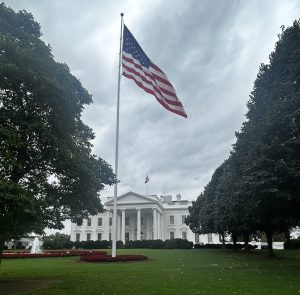
THE WHITE HOUSE
Finally, we began to approach the White House. As one of the most famous American landmarks, it was as busy as it could be. Interestingly enough, there was a crowd of protestors that stood before the fence. Coincidentally, we had come on the same date as a planned demonstration that had been organized months beforehand.
In the end, it was orchestrated by the East Turkestan Government-in-Exile. Ironically enough, we had come to D.C. on the 76th anniversary of the invasion and occupation of East Turkestan. I soon discovered that Washington actually houses the government ever since they had been ousted from their home. The crowd was chanting, requesting that the federal government recognize their nation.
Regardless, we continued to soak in the White House and everything that it had to offer. Although we obviously could not get any closer, it was still a sight to behold. Famously, it was reconstructed in 1814, when British forces burnt it down in the War of 1812. Since then, it has acted as the primary residence and workplace of every American president.
Although over the years there were expansions, details, and other general additions, there was not a modernizing renovation until the Truman Administration. The building had been poorly maintained for extensive amounts of time, and was facing dangers of a potential collapse. In response, Harry Truman would live across the street while changes were made. Since then, the building has been maintained relatively well.
Overall, the trip to D.C. was a wonderful experience. I would personally encourage all Americans to, if ever possible, attempt to visit significant landmarks from our nation’s history. When standing before the Lincoln Memorial or passing by the Washington Monument, I was filled with an appreciation of those who dedicated their time and efforts to the excellent preservation of our history.
Featured photo (at top): The Washington Monument, towers over the rest of the area. While on his visit to Washinton D.C., Reese Peterson not only visited the Washington Monument, but also Lincoln Memorial, the Eisenhower Executive Office Building and the White House. All photos were taken by Reese Peterson on Oct. 12, 2025.






Socials