
In a world where the teenage mental health crisis is worsening in severity every day, some states are defunding music and arts programs around the country despite the studies that show all the wonderful benefits music can have, not only on mental health but also on academic performance.
I can’t believe how anyone could ever justify cutting funding to music departments or, in some cases, whole music programs. The benefits of music are limitless.
Music allows students the opportunity to foster friendships with those who share similar passions, boosts academic performance and work ethic, promotes diversity and inclusivity in this modern-day where teens often struggle to feel accepted, and — this is what most people don’t realize — incorporates all subjects.
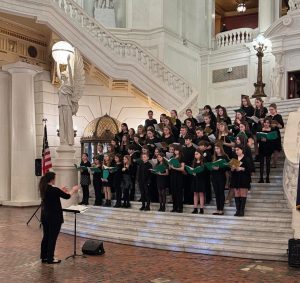
Administrators might try to argue that music isn’t as important as other “core” classes. What they don’t realize, however, is that music incorporates every possible “core” subject into its curriculum.
“What about math?” they ask. Well, I once sang a choral arrangement (in Filipino…) that had a time signature with ADDITION in it. Yes, you read that right; the time signature was 3/8 + 3/4. Time signatures determine how many beats each measure receives in a piece of music. This may seem like an easy feat, but it requires an intense level of focus to make sure you count the notes correctly and stay on track.
“Science?” they ask. In the process of learning how to play an instrument, you have to learn the physics behind the way the device produces sound in order to make that sound come out. In addition to the physics of sound, choir teachers also harp on vocal biology, meaning they teach all the body parts that play a part in singing and demonstrate how they all work in unison to make sound.
“English? Foreign language?” they ask. Concise English diction is required to enable the audience to understand the lyrics of a choir piece. In addition to English, a majority of choir pieces are written and sung in different languages. I have sung pieces in Filipino, Latin, German, French, isiXhosa (a South African language), Spanish, Italian, and Chinese.
“Well, there can’t be history or social studies involved in music, can there?” they ask. Wrong again. Simply put, without history, there would be nothing to base music off of. In band, I performed a piece entitled, “Moscow, 1941,” which instrumentally told the true story of the Red Army defending Moscow against the
Germans in WWII. I have listened to a choir piece called, “Harriet Tubman,” which told her story surrounding the Underground Railroad. In all music ensembles, I guarantee I have performed countless pieces all about the struggles of life and mental health, which I saw work wonders amidst my classmates.
“But, surely physical education isn’t involved?” they ask. Ask me how strong and healthy my lungs are from all the diaphragmatic breathing myself and other singers practice on a daily basis. Ask marching band members how their cardiovascular endurance is after weeks of band camp in the hot summer sun.
Administrators and others who think music isn’t as “important” as the above subjects need to realize this: music is the complete jigsaw puzzle and its puzzle pieces are all these “core” subjects. Studies have shown that students enrolled in music classes report higher grades on average than the non-musical student.
The fact that this superpower of music is backed by science only strengthens the argument that so many music teachers and music students from across the country support: music education is essential. School districts all around the world need to recognize the importance of music — if not for mental and developmental reasons, then for the academic benefits of their students!
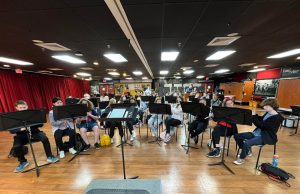
Featured Photo (at top): The MAHS Concert Band woodwind section attends a section masterclass with Dr. Colonna in Messiah University’s Parmer Hall. In addition to the masterclasses, the band also received a full tour of Messiah University’s campus. Photo from the Montoursville Music Department Facebook





Socials